NOTE: This is not an article about, or necessarily in support of Bernie Sanders. Please don’t read it that way. He is just emblematic of the larger point being made herein and therefore has to be referred to multiple times…
A very common criticism about Bernie Sanders—or more broadly, anyone who suggests helping the common man before the corporations—is that he proposes giving people lots of “free stuff.” But everybody knows that nothing is ever really free. Someone, somewhere has to pay for it. No free lunch, and all that. So the upshot of this criticism, sometimes expressed explicitly, sometimes not? That Sanders (as well as others who share his populist views) is lying and neither he nor anyone else can deliver on “free stuff.”
For his part, Sanders will often point out that the U.S. somehow always has money for war and can come up with it easy-peasy no matter how big the national debt is, and no matter how high the poverty level is, etc. Here is one such example of Sanders saying just that:
These same critics of “free stuff” for the people tend to withhold this criticism when “free stuff” that we can’t afford and that somebody has to pay for is being discussed as a gift to the military-industrial complex. They justify “free stuff” (that somebody has to pay for) to the military with one word: “terrorism.” Yet they can’t—more accurately, won’t–justify “free stuff” (that somebody has to pay for) with one word: “poverty.”
News Flash—The money will come from thin air, just like always
What both camps—Sanders (and his ilk) and his detractors—fail to grasp is that we can have it all. We can have it both ways. Neither Sanders nor his detractors will cop to what they have to know to be true, which is this: all money is created out of thin air.
This is not controversial in the least. It is admitted to by the Bank of England, the Federal Reserve, and major economists of all political persuasions. Even Time Magazine has done reports on this fact. It’s not a secret. At all. It’s just that almost nobody knows it (or pays attention to it), kind of like, I don’t know…the atom. The atom was always there, not a secret, just doing its thing—Democritus even told the world about atoms in the 5th Century B.C.E., but no one paid any attention until literally 2,000 years later! Maybe we could come to our senses about money in a little bit shorter time span than between Democritus and Dalton, like say right now. To help shorten the time, check out that Time Magazine report:
Fox: “[The Fed] can create dollars out of thin air.
Narrator: Money out of thin air? Sounds like magic to me.
Fox: OK, that’s magic. They do it in this really simple way, it’s just down at the New York Fed, which is this big building down on Wall Street. There are a bunch of people who call up banks and say, “Hey, I wanna buy some bonds from you.” And when the Fed buys say, $20 million worth of debt securities, they basically have this magic checkbook. The Fed just suddenly says, “OK, we’re sending you $20 million.” Those dollars suddenly show up in the bank’s books.
But those dollars weren’t anywhere before, it wasn’t like the Fed actually had this stash of dollars in its checking account.
Narrator: Annnnd that magic checkbook? Don’t try this at home. Only the Fed gets the magic checkbook. Think of the chair as a financial Gandalf.
Fox: That is the great, mystical power we bestow upon the Federal Reserve System.
Now will everyone please, pretty please with sugar on top accept this already? The source of the info cannot get any more mainstream than Time Magazine! It’s true, I tell you! All you have to do is accept it.
And once you do, you will no longer be able to roll your eyes and derisively say, “Yeah, but where’s all the money gonna come from to pay for Sanders’ ‘free stuff’?” You will know that the money will come from thin air, in any amount needed, just as Alan Greenspan testified before Congress:
Why not have that “somebody” Greenspan is referring to above be you and me? Greenspan—not me—says there is nothing that can stop that from happening.
I understand why you don’t want to accept it, but…
But maybe Greenspan was wrong about that, in one sense—there is something that prevents that from happening. And that is, that many people refuse to accept that money is created out of thin air and fake, because they think of money as something that they have to work 40+ hours for. And so such people don’t want other people getting “something for nothing.” I get it, I really do. But that is the divide and conquer method that is used by the elites to keep us from having the federal government—which is supposed to be you and me, remember—do exactly what Greenspan says. Printing as much money as we want and paying it to ourselves. Like I say, I get it:
“In other words, money is fictional. Imaginary. Think about that for a minute, particularly if it sounds wrong or nonsensical to you. Let it sink in. Try not to let what you’ve been told your entire life about money get in the way of understanding this very simple concept.
I know you don’t want to believe it. You can’t believe it. After all, if it were true, that would mean…all the hard work…all the long hours…for something imaginary? And that would mean all the hounding of the debt collectors and the shame and the guilt and the worry and the sleeplessness and the suicide or thoughts of it…were for something imaginary?
The truth hurts. But it is still the truth. And once we understand this truth, we face more difficult, painful questions, i.e., why should we let this continue? How best to get out of this false reality?”
And this is the main impediment to the equality that most of us at least give lip service to. We don’t want people who don’t work as many hours or as many jobs or as physically demanding jobs or as skilled jobs as we do to somehow get one over on us. Because we’re taught from birth that money is the reward for hard work and exists only in a limited supply that we have to cut each other’s throats (if necessary) to get.
But that isn’t true, and never was.
And that’s what I see in the sneers over Sanders’ proposals—no one really seems to have a problem with education and health care for everybody. They just don’t believe that the money is available to pay for it.
But as you can plainly see from this article, citing the most mainstream of sources, the money is available. The idea that we can’t pay for “free” education and healthcare and child care for everyone is completely false.
Accept the truth—listen to Democritus. Don’t make your children and your children’s children wait until Dalton comes along. Democritus and Dalton are contemporaries for the purposes of money creation—we already know the truth and it’s confirmed in spades.
All you have to do is accept it, even if every atom (!) of your education, upbringing, political affiliation, experience, bias, and so forth cry out for you to reject it.
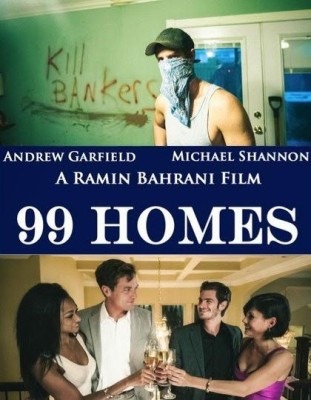
If you have not yet seen the powerful new film 99 Homes and want to be surprised how it all turns out at the end, you might want to stop reading this now, because I am about to spoil the ending for you! So, again, SPOILER ALERT!
For those of you who don’t care about the ending, plan to never see the film, or (hopefully) have already seen it, read on.
Synopsis
Let me start off by saying that I loved the movie. I highly recommend seeing it, especially if you or someone you know has been a victim of foreclosure fraud. I thought the performances were great, the plot was totally believable, the suspense was unbearable at times. and so on.
The story is basically this (and this much can be gleaned from the trailers): a down-on-his-luck construction worker in Florida—Dennis Nash, played by Andrew Garfield–loses his modest home to foreclosure. He lives there with his mother and his son. They are evicted from said house by a seedy real estate agent—Rick Carver, played by Michael Shannon–and two cops the day after a judge has ruled that Nash has 30 days to appeal his final judgment of foreclosure (this time frame is not an entirely accurate general representation of how things worked in Florida, according to this article).
The eviction is harrowing to watch, as Nash and his family are given two minutes to get their personal belongings out of the house and told they no longer own the house and are in fact breaking the law—trespassing—by being in the house. Carver has a crew that then removes all of the Nash family’s personal belongings from the house and just sets them down next to the street. Nash and family are now homeless, the locks to their house having been changed in this vile process, threats of jail if they “trespass,” no acknowledgment of the ongoing legal process, etc.
An understandably desperate Nash ultimately ends up working for Carver, first as a low-level employee, then as Carver’s right-hand man. Don’t want to spoil any more than absolutely necessary for the point I’m trying to make, so go see the movie to see how Nash gets sucked into violating the Golden Rule (by doing unto others what he didn’t want done to him).
MAJOR SPOILER ALERT!!!!!!!
It is in Nash’s capacity as Carver’s right-hand man that we see him perform an act that is at the heart of the foreclosure fraud. Specifically, we learn that a homeowner facing foreclosure that knows Nash has successfully challenged his foreclosure in court and is on the verge of winning his case and saving his home because the bank failed to file an important document which should have been filed years before the foreclosure.
Carver is aware of this and tasks Nash with delivering a forged and backdated version of this document (typical bank behavior in foreclosure cases) to the courthouse on the morning of the final hearing in this case. If Nash delivers the document, his homeowner friend will lose his case. If Nash doesn’t deliver the fraudulent document, his friend will win his case, but a very lucrative business deal between Carver and a real estate developer will fall through.
Long story short, Nash is shown agonizing over what to do—file it and screw the guy over, or don’t file it and screw himself over. Nash is then shown apparently leaving the courthouse without filing the document, but he is stopped by a court official who is privy to the situation, and the official snatches the document from Nash and takes it away to be filed. We then see Nash’s friend lose his case because of the fraudulent document (a typical outcome in a foreclosure case).
Cut to the eviction of Nash’s friend, which Nash is scheduled to conduct. The cops and the eviction crew are all there, but the homeowner is home with his family and everyone is concerned that this will be a messy eviction. And it turns out that it is, because the homeowner breaks his front windows with a rifle and fires on the cops. He says he knows that fraud went on in his case and that despite that (because of that?) the house is rightfully and legally his. Nash and Carver are of course keenly aware of this, and we again see Nash, ducking for cover with Carver behind an SUV, agonizing over what is happening.
Backup officers arrive and train their guns on the cheated homeowner. It looks like the cops are about to forcibly evict the homeowner, but Nash cries out and goes and stands in between the homeowner and the cops with his hands up.
Here’s the letting the banks off the hook part
So we’re wondering, is Nash going to ‘fess up? What’s he doing? How is this going to end? Well, Nash does in fact ‘fess up. He tells his homeowner friend, in front of everyone there—cops, neighbors, Carver, the eviction crew, and so on—“I cheated you.” Nash then goes on to explain that he filed the fraudulent document which caused the homeowner to loses his case, which led to this eviction standoff. Having heard this confession, the homeowner puts down his weapon, surrenders and is arrested. Carver is seen being questioned by some men in suits, and Nash is escorted to the backseat of a car by men in suits, presumably FBI or some such. Presumably the cheated homeowner gets to keep his home, which was one of a package of 100 homes that Carver was trying to get in a deal, but he lost this one, so he only got 99, hence the title of the movie. The end.
And so the banks are let off the hook.
How so, you ask? Because of those three simple words of that the movie puts in Nash’s mouth: “I cheated you.” It wasn’t the banks that cheated the would-be winner in court, it was Nash. The movie puts the onus of the cheating on an individual. Not the system. Not the banks. The blame is put on one desperate guy trying to save his own house and family. We never hear the banks or the system blamed for the fraud.
The message of the movie then effectively becomes: the greedy, conniving, soulless people caused the foreclosure crisis, not the banks. In fact, throughout the movie, we never hear from or see any bank or any representative of a bank. The few times banks do come up, the sense is given that banks are distant, mostly clueless, and easily bilked for money (as in Carver’s cash-for-keys theft scheme).
Indeed, when one thinks about it, the theme of the movie is essentially that, at street level, man-to-man, person-to-person, the law of the jungle prevails. Kill or be killed. That people will sell each other out willingly. Look how Nash was evicted by Carver and then immediately starts working for him, eventually performing evictions. We even get to hear Carver’s justification for getting into the evictions game, and it’s the same thing—there will be losers in this game, and I will not be one of them, even if I have to defraud the banks, the courts, and the homeowners. Paraphrasing Carver, he says that America has always bailed out the winners and always will bail out the winners. The system is rigged by the winners for the winners, so you just have to make sure that by any means necessary, you are a winner. Here’s a clip of Carver’s justification:
But this isn’t a story about the banks…(c’mon, really?)
Some might argue that this particular story isn’t about the banks. It’s about the human condition. As such, an indictment of the banks isn’t really part of it and indicting the banks would’ve made the movie ring false.
I suppose such a viewpoint is not without some validity, but to me, it was a disappointment, a big disappointment, to have the blame laid at the feet of the hapless Nash instead of the banks who designed and executed the entire scam. And honestly, it wasn’t a disappointment at the time. It wasn’t until I started thinking about it later that I realized Nash was being made the scapegoat, when all he did was act as the minion of the bank. Or it was a disappointment I couldn’t quite put my finger on immediately after seeing the film. As we walked out of the theater, my wife and I discussed the fact that unlike the movie, no one in real life admits that this cheating is going on. An admission like Nash’s never happens. And so it was immediately disappointing in that respect, but it wasn’t until later that I realized that the banks were let off the hook in this movie.
Go see it anyway
I still would encourage people to see the movie. Again, it had some great performances and touched on most of the major foreclosure fraud issues. And it serves the wonderful and vital purpose of showing the world the human toll this fraud takes—how it renders people homeless, destroys their lives, turns them against each other. Many people don’t have the patience to hear about these issues from the news or even from their family or friends who might have been affected by the foreclosure fraud. But put in a fictionalized movie that someone can kill an hour and half with, such people might begin to understand a little bit more.
What I’m pointing out here is not so much an indictment of the movie, or Hollywood, or the writer. I don’t think this was any grand conspiracy to make a movie that appears to be sympathetic to homeowners but ultimately places the blame on said homeowners. In fact, now that I think about it, having Nash take the fall instead of the banks is actually quite realistic, since that is what happens in real life. The banks and the brokers and all the higher-up are given deferred prosecution agreements and settlements, if it ever even goes that far. The bankers don’t go to jail. Instead, it is the people, the small fries, the henchmen like Nash are hung out to dry and are made to suffer. In that sense, it’s a really good conclusion to have Nash be the fall guy.
But I just want to make sure that no one watches this movie and forgets that it was and is the banks that are responsible for all of this. The banks are the ones who are cheating and defrauding us, but they of course want the courts and the public to think it is us who are cheating them.
…And of course, “Osama bin Laden” day makes absolutely no sense…
Yes, that’s a deliberately provocative and not entirely defensible headline. And no, I’m not trying to argue in favor of there being an “Osama bin Laden Day.” But think of it this way…
Columbus
1. Didn’t “discover” anything
Other Europeans had been to the Americas before Columbus. They just didn’t take it for themselves and rape and kill wantonly. Also, HELLO—there were already people living there, so they kinda actually “discovered” the Americas.
“Columbus forced all of them over the age of 14 to work in the gold mines searching for gold for the Spaniards. Those who refused were killed. Those who did not make their quota of gold had their hands cut off and were left to bleed to death.”
And for comparison…
Osama bin Laden
1. Didn’t discover anything.
2. Didn’t prove the world isn’t flat.
3. Killed a lot of people (according to the official conspiracy theory, anyway).
So for those not in favor of abolishing Columbus Day, maybe they’d be in favor of starting an Osama bin Laden Day? Makes about as much sense—when you really look at the facts—as Columbus Day.
And by the way, Columbus Day has only been a federal holiday since 1937, so it’s not like it’s some inviolable law of nature that we have to celebrate this mass murderer every year. Hasn’t even been a national holiday for a century yet.
One last thing—as I said at the beginning, I am not at all suggesting by this article that I think the U.S. should celebrate or create an “Osama bin Laden Day.” I just also think we shouldn’t celebrate a “Columbus Day.” Both are absurd. Why would we celebrate terrorism? Having said that, we obviously have to acknowledge that October 12, 1492 (the day that the island of Guanahani was spotted, not the day Columbus and company actually went ashore) was a momentous day. But perhaps it is better remembered through from the perspective of those who were already here and were murdered than remembering it from the perspective of the murderer.
Edward Snowden recently revealed more info about NSA spying on people via their wireless phones. This info was already out there, but when Snowden says it, people pay more attention (bbc.com, 10-5-15, “Edward Snowden interview: ‘Smartphones can be taken over’”)
Smartphone users can do “very little” to stop security services getting “total control” over their devices, US whistleblower Edward Snowden has said.
The former intelligence contractor told the BBC’s Panorama that UK intelligence agency GCHQ had the power to hack into phones without their owners’ knowledge.
Mr Snowden said GCHQ could gain access to a handset by sending it an encrypted text message and use it for such things as taking pictures and listening in…
Mr Snowden talked about GCHQ’s “Smurf Suite”, a collection of secret intercept capabilities individually named after the little blue imps of Belgian cartoon fame.
“Dreamy Smurf is the power management tool which means turning your phone on and off with you knowing,” he said.
“Nosey Smurf is the ‘hot mic’ tool. For example if it’s in your pocket, [GCHQ] can turn the microphone on and listen to everything that’s going on around you – even if your phone is switched off because they’ve got the other tools for turning it on.
“Tracker Smurf is a geo-location tool which allows [GCHQ] to follow you with a greater precision than you would get from the typical triangulation of cellphone towers…”
Once GCHQ had gained access to a user’s handset, Mr Snowden said the agency would be able to see “who you call, what you’ve texted, the things you’ve browsed, the list of your contacts, the places you’ve been, the wireless networks that your phone is associated with.
“And they can do much more. They can photograph you”.
Mr Snowden also explained that the SMS message sent by the agency to gain access to the phone would pass unnoticed by the handset’s owner.
“It’s called an ‘exploit’,” he said. “That’s a specially crafted message that’s texted to your number like any other text message but when it arrives at your phone it’s hidden from you. It doesn’t display. You paid for it [the phone] but whoever controls the software owns the phone.”
Describing the relationship between GCHQ and its US counterpart, he said: “GCHQ is to all intents and purposes a subsidiary of the NSA.
I posted a link to this story on Facebook and said I would be getting a pouch for my cell phone that acts as a Faraday cage in an attempt to block any attempts at being tracked, and it surprised me that a number of people didn’t know what I was on about. So I write this as a public service (and I readily admit I am not the first to do so!)
A Faraday cage is an enclosure that blocks electrical signals. You can read more about them here. So the idea is that if you put your phone into a Faraday cage, no one who wishes to hack your phone (i.e., criminals, government, or government criminals) will be able to do so while the phone is in that Faraday cage. A great video of how this works can be seen in this video put together by the makers of the Block-It Pocket:
Seems pretty promising, and it’s way past time that I picked one up for everyone in my family. There are of course other manufacturers of these pouches:
There’s even Kill Your Phone, a site that provides instructions on how to make the Faraday pouches with a group of friends:
“KILLYOURPHONE.COM is an open workshop format. Participants are invited to make their own signal blocking phone pouch. In the pouch the phone can’t send or receive any signals. It is dead! This workshop was run for the first time at the Chaos Communication Congress in Hamburg end of 2013. You can run this workshop yourself at your place with friends and neighbors, at the school, community center etc… Protect your privacy! Discuss surveillance and learn how to sew!
I am a Berlin based artist and I like to make projects about the Internet & computers and their impact on society.(see also Silver Cell phone pouch 2004) Aram Bartholl 2014.”
When I get mine, I’ll report back with a review. Feel free to do the same in the comments below when you get yours, or if you already have one.
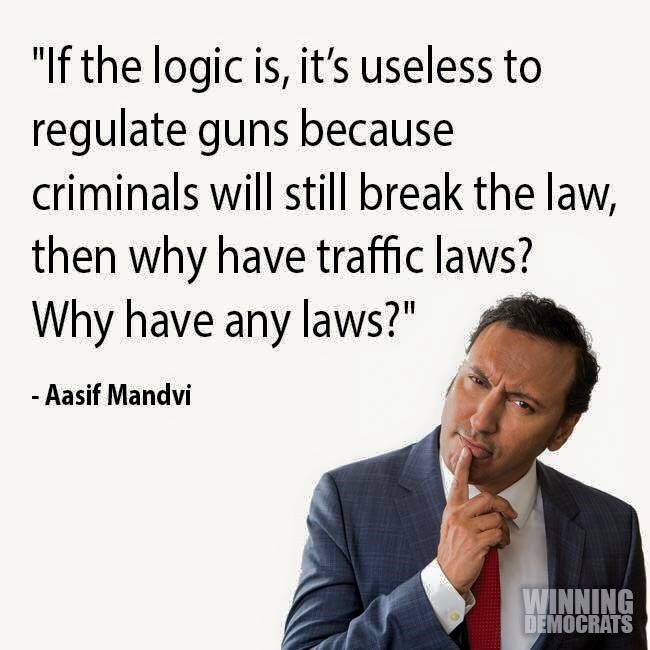
That’s actually a good question from Mr. Mandvi in the above meme: “Why have any law?” Of course, he’s talking about gun laws.
But it’s far more important to ask that question about matters other than gun regulations. What about the economic crimes of the banks and corporations that have cost millions of people their homes (almost 15 million foreclosure filings since just 2009), their jobs (nearly 95 MILLION people not in the labor force), their livelihoods, driven them to suicide, almost destroyed the world economy (which is still very likely to happen), cost trillions of dollars in bailouts ($29 trillion) and quantitative easing ($3.5 trillion), etc.? There are laws against all of this, yet they were not followed, in the vast majority of cases.
Indeed, why have laws at all? The answer: to keep us rabble in line. To make sure that you and I don’t have a gun to protect ourselves, or to have any savings or money to keep us from being thrown out into the streets, homeless. HSBC launders money for terrorists and drug cartels, and they get a slap on the wrist of a fine ($1.9 billion, a fraction of the bank’s profit for one quarter). No one goes to jail. Yet a marijuana dealer gets 81 years. Hell, Mary McCulley was bilked by US Bank, and SHE was sent to jail for investigating said bilking. No one at US Bank went to jail.
Indeed, Aasif Mandvi, why have any laws?
If the laws were applied fairly, we might not be having this discussion. But we all know they aren’t. So the question really isn’t “why have any laws” but rather, “why don’t we make the laws apply to everyone equally, regardless of economic status?”
Facebook is rotten with memes, status updates and listicles (“101 Stories More Important Than The Rebel Flag That You Morons Missed While Arguing About The Rebel Flag”) that dismissively tell us that caring about taking down the Confederate flag is “just a distraction” that we “liberal idiots” “fell for.” It’s as though those behind all these memes and listicles think people just now starting caring about this issue because they’re hopeless sheeple who only pay attention to the issue du jour.
On the contrary, this has been an issue for a very long time—so long that even when I wrote “Take Down The Rebel Flag” 15 years ago, I felt like I was a Johnny-come-lately to the debate. Note the date on this article:
The date is EXACTLY 15 years ago today. So nice try, smug thought police—I for one am not distracted by the Confederate flag issue at all. I, like millions of others, have cared about this issue for a long time and didn’t just glom onto it in the last month or so. It’s just currently at or near the top of the list of all the other issues I and others care about and comment on.
[SIDE NOTE: No one I know is suggesting that the Confederate flag be “banned.” What retail establishments decide to sell or not sell is up to them. As far as I’m concerned, fly the rebel flag at your house, from your car, whatever. Privately, go hog-wild if that’s your thing. But that flag shouldn’t be an official symbol of the state of Mississippi or any other state. I would not support any legal ban on displaying the flag on private property, and I don’t think anyone is calling for that.]
What I’ve seen a lot lately is an argument along the lines of “My great-great-great-grandpappy’s letters home from the front, where he fought for the Confederacy, never mentioned a thing about the Civil War being fought over slavery.” This is meant to refute the official statements from the states that seceded, saying that they were seceding to be able to keep slaves—very damning stuff (I wrote about that damning stuff before I got “distracted” here, from 2014, and here–from old blog–in 2007). Now I haven’t undertaken nor read any study of letters written by soldiers, but my sense of the situation is that in letters home, soldiers do not typically pontificate on their theories about the justifications for and/or political ramifications of a war or the policies that set that war in motion. They are in constant danger and just want to reassure their mothers and sweethearts that things are okay, or to relate how horrible conditions are, etc. Note that I said that typically soldiers don’t engage in such pontification—obviously, some do. Some, like Pat Tillman, write about their suspicions and misgivings about policies in personal journals instead of letters. At any rate, the point is that one individual soldier’s lack of mentioning, in letters from the front, that their personal belief that slavery was the reason for the Civil War does not negate or change the fact that indeed, slavery was the reason for the Civil War. After all, if the typical German solider in WWII didn’t mention the Holocaust in letters home, does that make the Holocaust any less real or horrifying? Does that make flying the Nazi flag okay now?
Because that’s the other thing: if Germany still had a swastika on its national flag, wouldn’t we find that at least kinda curious, if not outright terrifying? I would certainly think so. So when Mississippi clings to a flag that wasn’t even an official flag of the Confederacy or the state of Mississippi, shouldn’t we find that kinda curious also? If not outright terrifying? Because even though Mississippi’s current flag—which incorporates the so-called “rebel flag”—was adopted in 1894, decades before the Dixiecrats and the KKK began to use that flag as a symbol to opposition to the civil rights movement, that flag was still used a tribute to the Confederacy itself, which of course existed for the stated reason of maintaining chattel slavery of black people. So even divorced from its more modern usage, incorporation of the rebel flag is still meant to pay tribute to those who would perpetuate slavery, as mentioned here (Vicksburg Post, 6/30/15 “Current Mississippi flag born in Mayersville”):
“State Sen. E.N. Scudder of Mayersville, a colonel in a state militia group and the son of a Confederate veteran, designed the an amalgamation of the First National Confederate flag and the Battle Flag of the Army of Northern Virginia — in 1894 with memories of the Confederacy in mind.
‘My father loved the memory of the valor and courage these brave men who wore the gray,’ Scudder’s daughter Fay S. Corneil wrote to Eva W. Davis at the Old Court House Museum in 1955. ‘He told me that it was a simple matter for him to design the flag because he wanted to perpetuate in a legal and lasting way that dear battle flag under which so many of our people had some gloriously fought.’
So fighting over the Confederate flag is not merely a distraction. It is a fight over whether Mississippi, now the last state in the country clinging to the rebel flag, should continue to pay tribute to an attempt to perpetuate slavery, the very antithesis of founding principles like “all men are created equal” and the right to “life, liberty, and the pursuit of happiness.” Sentimental attachments aside, that’s what the message of the Mississippi flag is, in the words of the daughter of the man who designed it. Because whether the Confederate soldiers knew it or acknowledged it in their letters home or not, they were fighting to continue the practice of slavery. After all, that would have been the result had the South won—slavery would have continued.
So this is the end game of capitalism—the pool of cheap labor being drained by an insane quest for profit at the expense of people. Retailers like Walmart realize that their customer base has no money to spend because America has been financially raped by the banksters, so Walmart’s profits are in jeopardy. Their only solution, then, is to make the things they sell cheaper, which they can reliably do by counting on manufacturers that use the cheapest labor possible. It’s an attempt at having “capitalism”—but without giving anyone any real capital. Here’s the latest from the Wall Street Journal on draining the cheap labor pool until it’s a parched hole in the ground:
Several clothing giants are beginning to source in Africa. VF expects to start getting some of its pants sewn in Ethiopia this year. Calvin Klein and Tommy Hilfiger parent company PVH Corp.has been making some of its clothes in Kenya for at least four years. Others with sourcing in sub-Saharan Africa include Wal-Mart Stores Inc., J.C. Penney Co. and Levi Strauss & Co.
Whether or not Africa’s role as a supplier expands, those efforts show the lengths to which big apparel makers are willing to go to find new, low-cost sources of production. Consumers have been conditioned to expect a plentiful supply of cheap clothing, which has pressured the margins of companies like VF and PVH.
“In the global economy, light manufacturing is constantly moving,” said World Bank’s Guang Z. Chen, who was the country director for Ethiopia until last month and is now a director for several countries across southern Africa. “We see the possibility of this kind of industry moving away from Asia, because the labor cost is rising in China rapidly.”
Remember all the justifications for this type of thing? One big one was that the people in China and Vietnam are happy to be able to work for a living, and big companies like those mentioned in the quote above are very altruistic for giving these people a chance to work for a living, even if only for subsistence wages. Hey, that’s a lotta money for those people, the story went. Here’s a fairly recent (from December 2013) example of such logic:
There’s been, as we know, a tidal wave of companies coming in looking top employ rural Chinese on assembly lines. To the point that there’s no more rural Chinese to persuade to come into the big city to work in those factories. Companies now hire agents to try and go and find people. Bonuses are paid to workers who bring along a friend to work in the same factory.
And wages have risen, oh my how wages have risen. Back in 2000 annual Chinese manufacturing wages were around $1,000. Today they’re more like $6,500. I agree, that’s not much by the standards of us lucky ones who managed to get born into a rich country. But it’s most certainly one heck of an improvement. That improvement all having come about because Apple and the others wanted to try to exploit those workers but the net effect of those attempts being to make them vastly better off.
In fact, if the result of attempting to exploit workers is that their wages rise by over 6 times in only 15 short years, shouldn’t we be trying to do more of such exploiting?
So the focus is that the already laughably low wage has gone up by “over 6 times.” You could make the same argument if the beginning wage is a penny and 15 years later, the wage has risen to 6 cents. Hey, the wage went up 6 times—why are people starving and complaining? Because you know what else went up many times over that same 15 years? Inflation. If wages don’t keep up with inflation—and they don’t in China or anywhere else, as a rule—then wage increases are only nominal, not increases in purchasing power, which is the only factor that matters.
But now, that meaningless six-fold increase in wages is causing at least clothing companies, if those in other industries, to relocate to locales where they can again pay subsistence (or less) wages. Which was the excuse for these same companies to relocate their manufacturing out of the US, because the workers in the US cost them too much and got too uppity. Read it and weep:
Levi Strauss & Co., the California Gold Rush outfitter whose trademark blue jeans have been an American clothing staple for generations, on Thursday closed its last two sewing plants in the United States.
The financially troubled company has been steadily shifting production to overseas contractors for several years to cut costs and invigorate drooping sales in the ultra-competitive apparel market.
About 800 workers at the 26-year-old San Antonio plants have lost their jobs in the move, which was announced in September. Jeff Beckman, a Levi Strauss spokesman, said the 150-year-old company was making a delayed but ultimately unavoidable business decision.
“We tried to do our best to maintain manufacturing in the United States, but we have to be competitive to survive as a company,” he said.
The article goes on to point out that Levi Strauss also closed its Canadian plants and moved to China. Now we see from the WSJ article at the beginning of this post that Levi has decided that both the US and China cost them too much and is now in Africa for that reason. When Africa starts costing too much, where will Levi Strauss and others like them turn?
This is the central question, the central dilemma of so-called capitalism: how to have cheap labor yet simultaneously have those same people be able to afford the products sold by companies like Walmart and Levi Strauss. They managed to square that circle for some time, but it’s clearly becoming harder and harder to do so and won’t be long before that’s impossible to do. Walmart has acknowledged this before, showing that the façade is crumbing:
While it posted a profit in its third-quarter earnings report and beat analysts’ expectations, the company trimmed its forecast — citing persistent unemployment within its customer base, jitters over the government’s health care plans and tight budgets all around.
“Their income is going down while food costs are not,” William S. Simon, chief executive of Walmart, said of the company’s customer base. “Gas and energy prices, while they’re abating, I think they’re still eating up a big piece of the customer’s budget.”
In a post-Oxi appearance on the Keiser Report (episode #780), noted economist Steve Keen spoke about the Greek economic situation specifically, then about the nature of debt generally, and in so doing perfectly encapsulated what I recently have been chastised on FB for pointing out (approx. 22:08):
Keen: It’s again this fallacy about the nature of money. Because if they [Keen is referring to German citizens] realized what the nature of money was, debt relief doesn’t mean they’ve gotta hand their saving over to the Greeks. This is the myth that unfortunately gets in the way of us instituting a system of global debt reduction, because we’ve gotta reduce the level of private debt, and German workers will benefit just as workers everywhere else in the world will if we can reduce the levels of private debt. That’s what we’ve gotta do.
And when we think about debt, it’s like [gesturing to Keiser’s glasses], you lend me your glasses, okay? If I don’t give them back to you, I’ve stolen the glasses from you. And that’s the sense of debt which—apparently the German word for “debt” also means “shame” or something like that in German—so it’s tied up with that personal not-giving-something-back.
And here’s the (pun intended) money quote that takes the piss out of everyone defending the idea that money created out of thin air (as all money currently is and really has been for all of history) has to be paid back or else it’s chaos and the moral fiber of the universe itself will completely unravel, inevitably leading to dope, guns, and fucking in the street:
But when debt is created by a bank, it writes a positive entry for itself on the asset side saying “Here’s a loan, which we’re going to get an income stream from you out of,” and a negative entry for itself on the liability side saying “Here’s the money we have loaned you.”And it’s simply double-entry bookkeeping. There’s no cost involved in doing it. So if we set it up and rewrite it, debt can be written off easily, and in fact if you don’t allow debt write-offs, capitalism will always collapse into a black hole of debt. And that’s what we’ve got. Greece, unfortunately, is deepest into the black hole.
And then Keiser follows-up and hones in on Keen’s point:
Keiser (approx. 23:35)…and so now you’re saying, linguistically, there’s almost a shame built into the word, and so, the perception is that: all debt is to be paid, it’s sacrosanct. Whereas what you’re saying is, “No, all debt is a two-way contract, there’s a borrower and a lender, and they’re always negotiating throughout the entire life of that debt, and there’s many, many ways that debt can be written. The debenture for a debt—there’s thousands of ways to write it…
And of course, Keen agrees with Keiser’s assessment. The financial contract has become “comply or die” much the same way the police force has been behaving in America lately. They don’t want to work with you. They would rather see you homeless, impoverished, dead, or all three rather than work out something that mutually benefits everyone involved. That is what is being done to Greece, and there comes a point when you have to say “Oxi.” And saying “No, Oxi” is much easier and you feel much less shame when you understand the nature of how money actually works, which is why Keen’s explanation above is so very important.
And that’s why money is fake
So that’s why money is fake—as Keen said above, “there’s no cost involved” in a bank creating money, and that is true for any bank, whether it is the World Bank, European Central Bank, the Federal Reserve, or your local bank. If there’s no cost involved, there’s no risk involved. And if there’s no risk involved, there should be no reward involved. Isn’t that what capitalism is supposedly based on, a system of risk and reward? But then the system was rigged around, oh 1971, when the system was set up to let banks put all the risk on us, then take all the reward and pretend that is capitalism.
I don’t know how it can be any clearer—money doesn’t exist, except as a concept, a fiction. And that is why we must stop living and dying by it. We must stop letting banks force entire nations into austerity, stop letting them strip assets from individuals. We must get this one simple truth through our thick heads: the “money” that banks “loan” is nothing more than your signature on a piece of paper, sold back to you. It’s imaginary. It has no value other than what we give it in our own heads.
And this is why I offer self-issued currency as a solution—since (not if) money is fake, then it must be treated as though it is fake. And the best way to do that is to just let everybody create as much money (denominated in dollars, not “[your name here] dollars”—just regular dollars]) as they need and soon enough, it’s likely that no one will need very much. Because no more can we tolerate governments and their bosses, the banks and corporations, acting as though we have stolen something from them if we find ourselves—for whatever reason—unable to “pay back” one of their “loans.” That’s the underlying assumption of all this, as Keen points out above, that the Greeks and the rest of us plebs are stealing from banks if we don’t “pay back” the “loans” that they made to us at zero cost, zero risk to themselves. But it’s a completely false assumption, and it’s one that has been inculcated by the education system and the press for years now and it has been inculcated on purpose (as the Bank of England explained here: scroll down to the section entitled “Economics textbooks as mind control devices”).
Indeed, it would be one thing if we called the riskless act of creating money out of thin air something other than a “loan.” At least that way, it would be easy to understand what we’re actually talking about and the media wouldn’t be trying to make us hate those thieving Greeks, the media would be saying that “these weren’t loans, after all, it was only imaginary money created out of thin air, because if these had been actual loans, maybe these banks might have a point.” But now that I say that, I realize that the whole nomenclature is even trickier than I thought—what is now called a “loan” from a bank to you actually is a loan, it’s just that it’s really a loan from you to the bank. And that is the reverse psychology/prestidigitation of the whole thing that they’re hoping we don’t realize.
So if banks creating money out of thin air was referred to as—trying to think of a sufficiently legalistic, seemingly harmless term…”conjuration,” maybe…or what about…I really can’t think of a good weasel word that would sort of describe the fakery involved yet also make it seem legitimate. But it’s clear that the word “loan” being used in conjunction with what banks actually do is laughable and merely pretense designed to get us to think that banks somehow have more money and skill than we do. It’s literally an insane situation and I find it difficult to explain to people just how insane it is, so I’m overjoyed when someone summarizes the insanity as well as Keen did on the Keiser Report.
Your thought for the day, in the words of Steve Keen: “Debt can be written off easily.” Not “paid back”—written off. Because in reality, there’s nothing to pay back since it was created out of thin air at your request.
So Greece has now “defaulted” on its international “obligations,” thereby becoming the first developed nation to challenge the hegemony of the international system of finance—as opposed to the actual economy—by simply not paying. Russia Today puts it thusly:
The International Monetary Fund has confirmed that it didn’t receive the €1.6 billion payment from Athens that was due by the end of June 30, Brussels time, making Greece the first developed country to default on its international obligations.
IMF spokesman Gerry Rice said in a statement that Greece had asked for a repayment extension earlier Tuesday and that the fund’s board will consider it “in due course.”
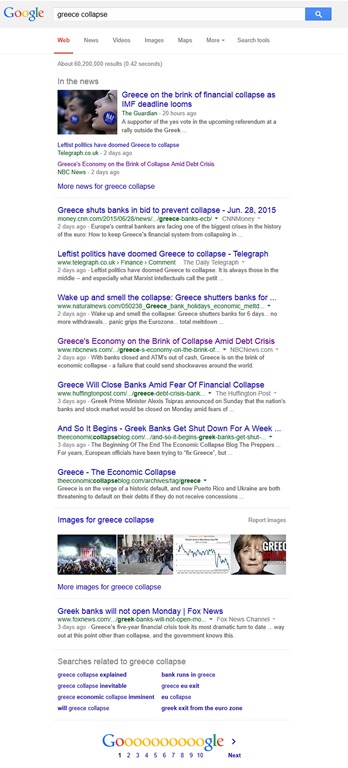
This very simple yet profound act of not “paying back” so-called creditors who supposedly “took a risk” by “lending” to Greece is widely touted in the press as making the “collapse” of Greece more or less inevitable:
However, a “collapse” of Greece or Puerto Rico or Ukraine—or even the United States—is completely unnecessary for a very simple reason we have spoken of many times here at LRM: all money is fake, without exceptions (including gold and silver). I briefly will outline the reasons why a collapse is unnecessary below:
1. Money is a concept, not something you can touch or even own
Indeed, money is a unit of measurement, like inches or miles. Despite the bills and symbols and coins and other representations of money, money remains a unit of measurement, not something by which people should live or die, starve or gorge themselves, succeed or fail. Felix Martin describes it very well in his book “Money: The Unauthorized Biography”:
What actually is a euro, a pound, or yen? Not, of course, a dollar note, or a euro coin, or a pound coin, but the dollar, the euro, the pound itself. Well, as Alfred Mitchell Innes, the great but neglected monetary scholar of the 20th century said, ‘the hand has never touched nor the eye seen, a dollar.’ That, of course, is true, because a pound, a dollar, a yen, a euro, they are just units of measurement of an abstract scale of value. It is very easy to think, of course, that they are something physical, and many people have thought like that over the years, particularly in times when we had forms of currency that were made of precious metal and therefore had some intrinsic value of their own. It is more difficult to think of that when we really consider it these days, when most money is electronic, when most money is composed of the liabilities of banks, and yet we do still have the habit of thinking like that.
Indeed, no one has ever not been able to draw a line 6 inches long because he didn’t have enough inches. That’s absurd—no one even thinks about units of measurement that way. So why do we allow a starving man to not be able to have a 6-inch sandwich simply because he doesn’t have enough “units of measurement of an abstract scale of value,” i.e. so-called money? Why would we let a country like the legendary Greece collapse for the same stupid reason?
2. Money does not exist in nature and has to be created by people
I have written about this many times here at LRM, but perhaps nowhere more clearly than here:
Money must be created by someone, somewhere, because money does not exist in nature–except to the extent that a natural item like gold or salt might be assigned the properties of money. Despite what the typical Western economics professor might say, money does not just naturally come into being as a consequence of people needing to exchange things. Indeed, as Bartolome de las Casas observed of the native Cubans in the 16th century:
“…[the natives] put no value on gold and other precious things. They lack all manner of commerce, neither buying nor selling, and rely exclusively on their natural environment for maintenance. They are extremely generous with their possessions and by the same token covet the possessions of their friends and expect the same degree of liberality.”
That is to say, money is a creation of man, and as such, it should serve man, not enslave him. Can it be that the “uneducated,” “pagan,” and “savage” natives of Cuba from centuries ago were more civilized and wiser about economics than we are today? It certainly would seem so.
To get right to the point, modern currency is fraudulent for the following reason: all modern currency is actually created by the participants in a currency system but it is legally treated as though it is created by, and therefore owed to, banks. That’s it in a nutshell. That’s the entire problem.
Let me try to explain what I mean as clearly as possible. The Federal Reserve itself tells us that “banks actually create money when they lend it.” The emphasis in that little nugget is on the role of the bank in the money-creation process, but that emphasis is completely misplaced. That’s because what is implied in that statement is that for a bank to “create money,” someone first has to come to the bank and ask to be lent money. In other words, a bank is powerless to “create money” unless a “borrower” comes along.
3. The international system of finance is antithetical to the actual economy
The media tend to have us focus on things like the stock market, treasuries, the stock market, mergers and acquisitions, the stock market, and the stock market—heh—to indicate the health or slightly-less-than-absolutely-optimal health of the economy. In reality, the stock market has nothing to do with the economy. The stock market (and other similar indicators touted by the media) is merely the indicator of the health of the international system of finance, which is nothing more than a vehicle for indebting nations and individuals by pretending to create money (see #2 above) while really creating nothing but debt and the servitude that necessarily goes along with that debt.
The economy, on the other hand, is the things that real people do every day—working, shopping, fixing their cars, painting their houses, preparing meals, washing clothes, bathing, eating, drinking, etc. You get the picture. Those activities are not indexed at all in the typical economic health indicators. That’s because they are the stuff of which real life is made and have nothing to do with the stock market and the international system of finance.
And yet we see that the international system of finance has encroached upon the actual economy of the world via the enforcement of so-called “austerity,” which you can read all about here. This austerity is the international system of finance’s way of punishing those people and countries who don’t—whether they cannot or will not—play by the system’s rules. Paul Craig Roberts describes the situation well here:
“The ‘Greek crisis’ is not about debt. Debt is the propaganda that the Empire is using to subdue sovereignty throughout the Western world.
The Greek government asked the collection of nations that comprise the ‘democratic’ European Union for one week’s extension on the debt in order for the Greek people to give their approval or disapproval of the harsh terms being imposed on Greece by the EU commission, the EU Central Bank, and the IMF with Washington’s insistence.
The answer from Europe and the IMF and Washington was ‘NO.’
The Greek government was told that democracy doesn’t apply when creditors are determined to make Greek citizens pay for the creditors’ mistakes with reduced pensions, reduced health care, reduced education, reduced employment, and reduced social services. The position of the Empire is that the Greek people are responsible for the mistakes of their foreign creditors, and the Greek people must pay for their creditors’ mistakes, especially those mistakes enabled by Goldman Sachs.
As has been proven conclusively, the Empire’s claim is false. The austerity measures that have been imposed on Greece have driven down the economy by 27%, thus increasing the ratio of debt to GDP and worsening the financial situation of Greece. All austerity has accomplished is to drive the Greek people further into the ground, thus making debt repayment impossible.
The Empire rejected Greece’s democratic referendum next Sunday, because the Empire doesn’t believe in democracy. The Empire, like all empires, believes in subservience. Greece is not being subservient. Therefore, Greece must be punished. The Persians Darius and Xerxes had the same view as Washington and the EU. The Greek government is supposed to do what previous Greek governments have done, accept a pay-off and allow Greece to be looted.
Looting is the only way left for the Western financial system to make money. In pursuit of short-term profits, western corporations, encouraged and coerced by the financial sector, have moved offshore western industry, manufacturing, and professional skills such as information technology and software engineering. All that remains for the West are highly leveraged derivative bets and looting. Apple is an American corporation, but not a single Apple computer is made in the US.”
So the goal has been for the international system of finance to make it all but impossible for the real economy to function. Because the system is about control of humanity, not about enabling humanity to be the best it can be.
4. No risk was taken by any so-called lender or creditor in making any of these so-called loans
Angry yet? If none of the info mentioned so far has moved you, it’s probably because you think that these countries and individuals owe these banks because damn it, the banks took a risk in making these loans, and the banks will be hurt financially if they aren’t “repaid.” And of course the reliable old saw that says—I’m paraphrasing—if you take a big risk you deserve a big reward.
But ask yourself this question: how can creating money out of thin air be risky? Short answer: it isn’t, not even a little bit. Go one further and ask yourself: if there’s no risk to these lenders, why do they deserve a reward or even to be repaid at all? Short answer: they don’t. Here’s a little discussion of why that is so:
“…if we return to the opening paragraph of this post, we see the money that Evans “borrowed” was actually created out of thin air by the act of Evans asking for a “loan.” Again, this is not my opinion. The Bank of England explained it quite clearly in a recent press release:
“Commercial banks create money, in the form of bank deposits, by making new loans. When a bank makes a loan, for example to someone taking out a mortgage to buy a house, it does not typically do so by giving them thousands of pounds worth of banknotes. Instead, it credits their bank account with a bank deposit of the size of the mortgage. At that moment, new money is created.For this reason, some economists have referred to bank deposits as ‘fountain pen money’, created at the stroke of bankers’ pens when they approve loans.”
Did you get that? They said it themselves—banks do not give “thousands of pounds of banknotes” when they make a “loan,” banks just credit an account with a bank deposit “of the size of the mortgage.” In other words, bank “loans” are not cash, they are merely keystrokes in a database that says you now have money in an account whereas you didn’t have that money the few seconds before the keystrokes were made. That’s it.
So since bank loans aren’t cash—says the Bank of England, not me—what risk is there in bank lending? None at all. But the idea that a bank “loaned” someone like Kevin Evans money—and took a real risk to do so—is the entire logic behind punitive wage garnishment, foreclosure, debt collection, etc. But that idea is totally false.
How many times have we heard those words—“did you borrow the money?” That’s the justification for our entire system, but it is based on an entirely false premise.The question should really be asked back—“did you loan the money, or did you just hit an ‘Enter’ key on a computer?” Because the real answer to that question is the latter, and that means thatthere is no risk in bank lending, whether that be for a mortgage, education, car, credit card, or what have you.
Some might scoff and say, “Well, but that’s the way the system works, and so you have to live with that.” For now, maybe. But that is the entire point of this site and the thousands of others like it—to raise awareness of what is actually happening and to question the not only the morality of such a system, but also the wisdom of such a system. Yes, it may be legal, but is it right? Hell no, it isn’t right. It’s slavery by another name. It certainly isn’t capitalism.”
Capitalism IS risk, so we are not living under capitalism
“All capitalism is about risk. Rewards do not come otherwise. Sometimes risk is high; at others it isn’t. ”
So since banks can “lend” money at zero risk—as we have shown that banks do as a matter of course—there is no capitalism. There’s especially not capitalism when the same banks can use the state to extract the artificial, fictional, risk-free money from people who can ill afford it, or even from those who can afford it. The lie that banks lend money and take risks in doing so is now so thoroughly discredited that the current system which enforces that lie needs to be junked immediately in favor of one that accepts that all money is fictional and is only a means to an end, not an end unto itself.
5. Since no risk was taken, there is no economic or any other kind of damage done to these so-called creditors if Greece—or anyone else—”defaults”
This point is obviously closely related to #4 above, and I separate it only to specifically point out that a jubilee, or forgiveness of debt, would have no ill effects on any “lender”/”creditor” that isn’t a private individual that directly lent cash. And in the case of Greece, Puerto Rico, and almost every individual and country, the debts we are talking about are “owed” to banks that create money out of thin air. So completely forgiving the debts of Greece, or Puerto Rico, or you, or me would have exactly zero ill effects for the banks involved. Those who still haven’t gotten the picture from the above statements might well be saying, “This isn’t true—the banks lent money and will definitely suffer if that money isn’t repaid.” If such people cannot see that banks did not lend money that existed prior to a “borrower” asking for a “loan,” then that can only be because such people do not want to see the very plain truth.
6. The so-called collapse is so-called inevitable only because the so-called creditors and lenders do not want us to realize the first 5 truths mentioned above.
I know, that’s a lotta “so-called.” But I don’t know any other good, quick way to get people to question the assumptions that are being made in many reports on the Greek situation and others like it. In other words, what I’m trying to say is that a collapse is separate from repaying fraudulent loans to the international system of finance. The collapse the mainstream is really worried about is the collapse of the international system of finance, which will certainly collapse when people realize and take to heart the truths pointed out here. But if these truths are taken to heart, the only collapse will be of the vampire squid that is sucking out the soul and sustenance of humanity, because the real economy in which we all participate just by being alive is in no danger, while the international system of finance is in very real, very palpable danger, and it wants us to feel its fear. Don’t give in to it!
I was chastised last night on Facebook for constantly posting about the reasons why I believe that the rebel flag should be removed from Mississippi’s flag and from South Carolina’s capitol. And of course, trying in vain to promote my 15-year-old song about it (as friends and family keep suggesting I do). It’s damn hard to make something “go viral,” as it turns out. But I try:
But the futility of arguing over the old slavery–the exclusive kind, targeted at “the other” (not entirely, but mainly)–while failing to argue about the new slavery that has been in place since at least the Nixon Shock of 1971 and is all-inclusive and will be solidified under the TPP, which just won fast-track authority in the Senate, is not lost on me. In fact, while we are arguing about the rationale for the South’s secession in the 1860s, it might be a good time to point out that the corporations of the world are also trying to secede from the U.S. and the other nation-states that allowed for their creation and want to declare their own sovereignty. So they can keep us as slaves.
The “New” Slavery
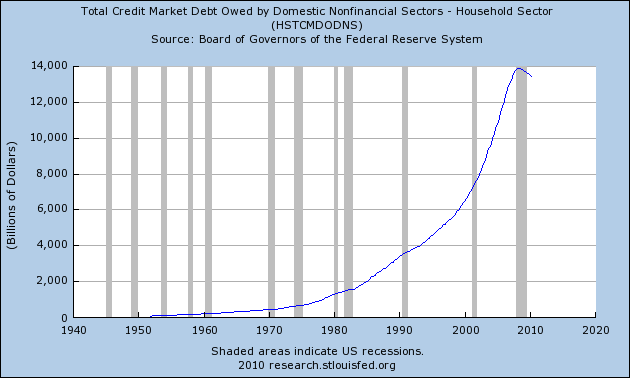
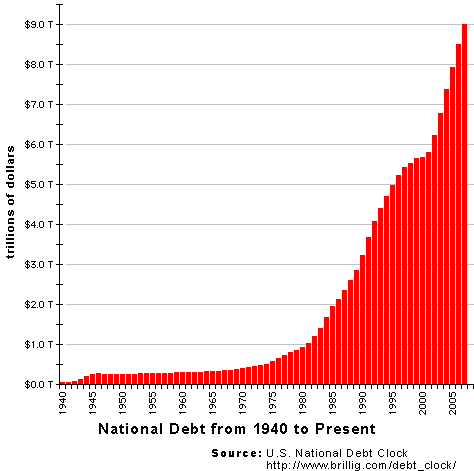
Indeed, after the end of slavery in the U.S.—officially with the final ratification of the 13th amendment on Dec. 6, 1865—it only took a little over a century for the banks to turn everyone (not just people of a certain skin color or ethnicity) into not just wage slaves, but also debt slaves. Slavery was reborn, but with the outward appearance of freedom. This of course was achieved by the Nixon Shock/end of Bretton Woods in 1971, meaning that banks could “create” and “lend” the national currency at interest with no regard to any real world limits such as a supply of precious metals. In other words, the banks were given the divine right of money creation, allowing them to literally rule over us because even the government has to borrow from the Fed (by “selling” bonds created out of nothing to the Fed, which the Fed “pays” for with money it literally types into existence, not out of some pre-existing stash of money, i.e, the whole process is completely fictional and imaginary–and unnecessary). At interest, natch. Since then, household debt and national debt have skyrocketed, while incomes have stagnated. That’s the essence of the new slavery. Here are three charts that demonstrate this:
In many ways, this new slavery is the perfect form of slavery, from the perspective of the masters. That is because this new slavery seems legitimate even though it clearly isn’t and the banks themselves don’t even try to hide that fact (to be fair to us, they don’t really try to publicize it, either)—as the common-but-completely-incorrect narrative goes, the banks have the money and we don’t, so we must depend on them for our money. This new slavery is also not called “slavery,” it’s called a “loan.” Or a “job.” You get the picture.
The New Secession
In a similar way, the Trans-Pacific Partnership is a new form of secession from government, just like the Confederacy. The TPP will place transnational corporations above and outside of governments, as The Atlantic explains:
“…the U.S. government has consented in prior trade agreements, and in a leaked version of the still-secret TPP, to allow foreign investors to bypass our courts and instead move to “investor-state” arbitration. Thus, challenges based upon TPP to our duly enacted laws and other regulatory actions would be decided by three individuals who are not government officials and need not be American citizens. And they would have the final word as to whether the federal government will be compelled to pay damages, because there is no judicial review in any U.S. court of the merits of these arbitral rulings.”
We can see then,that the TPP is essentially the articles of secession for multinational corporations, who will in a very real sense secede from the authority of all governments and become essentially sovereigns unto themselves to a greater degree than ever before.
And just like the Southern states that made up the Confederacy seceded to preserve slavery, the corporations want to secede from governmental authority via the TPP and other so-called “trade” agreements to preserve slavery. That is, to say, they want to keep us as their slaves and them as our masters. They know we’re waking up to their free money scams, the bailouts, the fake foreclosures, the fake money, everything. They fear us—as the owner of Cartier pointed out recently:
“How is society going to cope with structural unemployment and the envy, hatred and the social warfare?” he said. “We are destroying the middle classes at this stage and it will affect us. It’s unfair. So that’s what keeps me awake at night.”
They know full well what they are doing, and do it anyway. They want us to believe it’s for our own good. And in the end, which affects us more right now, the Confederate issue or the TPP? The answer’s obvious, but we still need to take down that damn rebel flag as an officially-sanctioned state symbol!









 LIBERTY ROAD MEDIA